FTC Investigates OpenAI and Anthropic: What Could Happen
 Nina18 min read
Discover everything about artificial intelligence: news, updates, tools, fun facts, history, trends and real-world applications of AI. Keep up with the latest advances, understand their impact and explore the future of artificial intelligence.
31 published articles
Artificial intelligence is the field that builds systems capable of doing things that would require reasoning if a person did them: understanding a sentence, recognizing an image, writing a piece of text, deciding the next step in a task. The definition is broad on purpose — it covers everything from a spam filter to the model that answers your question in plain language.
What's changed in recent years isn't the definition, it's the capability. Systems that used to handle one narrow task can now take on open-ended requests, and that's why the term left the lab and became part of everyday conversation.
Most of what we call AI today learns by example, not by written rules. Instead of someone programming "if the message contains these words, it's spam," the system is fed a huge number of messages that have already been labeled and figures out on its own the parameters that tell one thing apart from another.
The cycle always has the same stages:
Data. The training material — text, images, records. It's what caps the result: the system learns whatever patterns are in there, including the wrong ones.
Training. The model adjusts its parameters to make fewer mistakes on the examples. This is the expensive part, measured in weeks of compute.
Inference. The trained model responds to your request. It's what happens when you type into a chat window.
None of these stages involves understanding in the human sense. The model doesn't know it's talking about a topic; it produces the most likely continuation of whatever it was given, and the impression of understanding comes from how good that prediction is. Keeping this in mind explains both the hits and the misses: the same mechanism that writes an excellent summary will make up a reference that doesn't exist — with exactly the same confidence.
There are two classifications worth knowing, and they answer different questions.
By capability — how far the system generalizes:
Narrow AI (ANI). Handles defined tasks, even if it handles many of them. It's the only kind that exists today, and it includes every known language model.
General AI (AGI). Would be able to learn any intellectual task a human can. It's the stated goal of several companies, and it doesn't exist.
Superintelligence (ASI). Would outperform humans across the board. It's speculation.
By functionality — how the system deals with time:
Reactive machines: respond to a stimulus, with no memory.
Limited memory: uses recent history, which is how a chat works.
Theory of mind and self-awareness: theoretical proposals, with no implementation.
LLM stands for large language model. It's the family of models behind chat assistants: trained on massive amounts of text, they predict the next chunk of a sequence, and a full paragraph comes out of that prediction repeated over and over.
Three practical consequences follow from that:
Context is limited. The model only considers what fits in the context window for that request.
Cost is measured in tokens — pieces of words — on both input and output. That's why your usage bill grows with the length of the text, not with how hard the question is.
Errors are part of the mechanism. A model that always answers fluently also answers fluently when it doesn't know.
Frontier models change names every few months. What's worth tracking is what each one changes about what you can actually do:
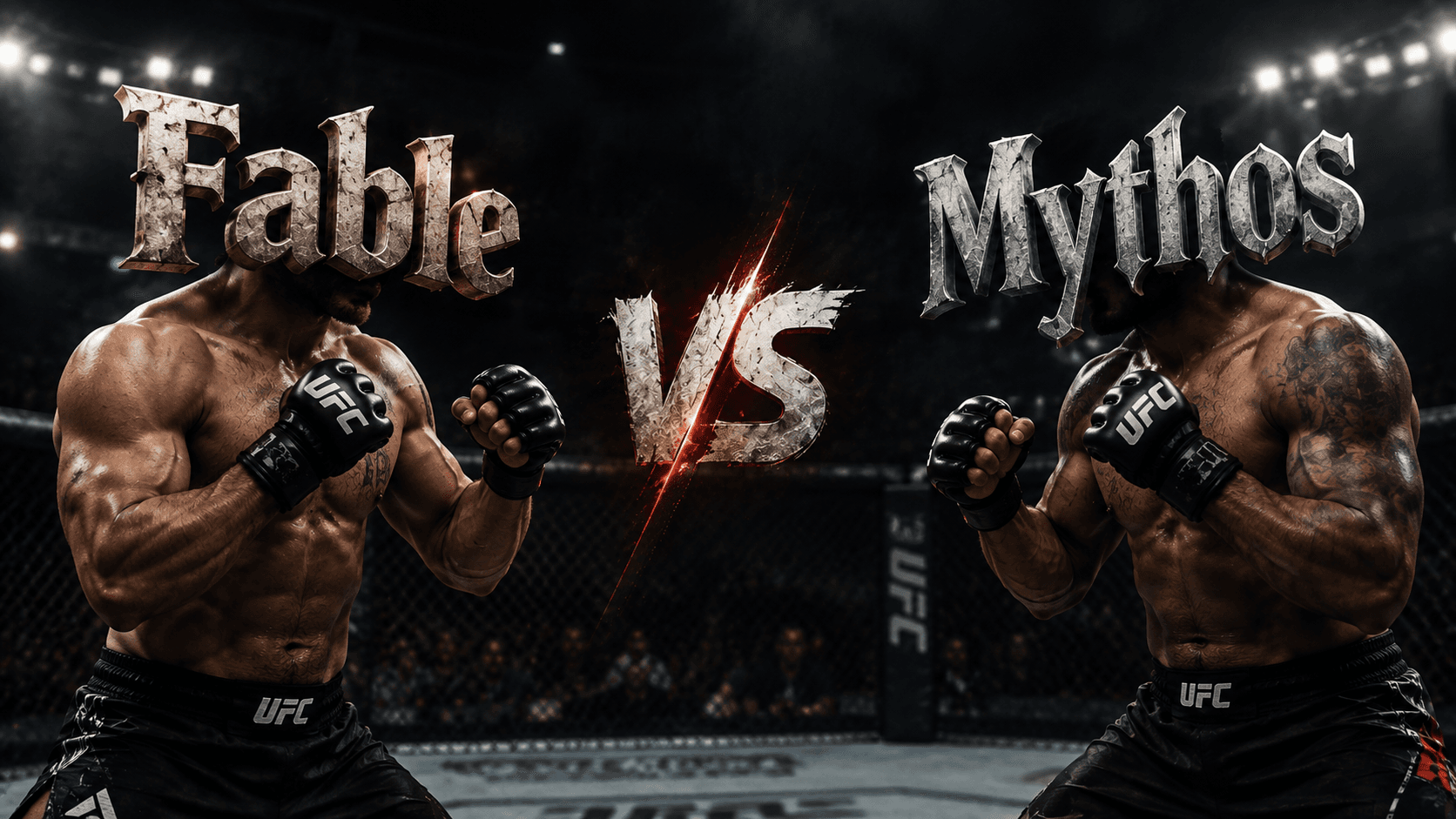
Claude Fable 5 and Claude Mythos 5, from Anthropic — a side-by-side comparison of the two, where they differ, and what each one is for.
Why Claude Mythos is "under lock and key" — the restricted access and the stated reason behind it.
GPT-6 Astra, from OpenAI — what actually changes and why the reception was what it was.
There are two ways you get billed, and mixing them up is the most common beginner mistake:
Subscription, for using the assistant through its interface. A flat monthly price, with usage limits per time window.
API, for plugging the model into your own system. You pay per token used, with no cap — the cost scales with volume.
If you plan to automate anything, you need to understand the second one, because that's where the bill catches people off guard. The article why Claude Fable is so expensive breaks that bill down: credits, tokens, and what drives the price up.
Will AI replace programmers? So far it has changed how the work gets done, not how many people do it: the model writes snippets and reviews code, and someone is still accountable for what ships to production. The question that ages better is a different one — which part of your job is repetition?
Which AI is the best? It depends on the task, and the answer changes with every release. For long-form writing and code, Anthropic's and OpenAI's models trade places often; testing them on your own use case is worth more than any general ranking.
Can I use AI for free? Yes, with limits. The major assistants have a free tier with usage caps and, usually, access to smaller models.
What is an AI agent? It's a model that's allowed to take actions — search the web, run code, edit a file — instead of just answering. The upside is that it can handle multi-step tasks on its own; the risk is that any step can go wrong with nobody watching.
Nina18 min read
Nina17 min read
Nina17 min read
Nina20 min read
Nina16 min read
Nina14 min read
Nina16 min read
Nina19 min read
Nina19 min read
Nina19 min read
Nina18 min read
Nina20 min read
Nina16 min read
Nina20 min read
Nina15 min read
Nina17 min read
Nina19 min read
Nina18 min read
Nina17 min read
Nina20 min read
Nina15 min read
Nina16 min read
Nina18 min read
Nina19 min read
Nina5 min read
Nina20 min read
Nina5 min read
Nina5 min read
Nina5 min read
Nina5 min read
Nina5 min read