Can artificial intelligence think like a human?
AI answers with clarity and even humor — but is that thinking? What science says, the Turing Test, the Chinese Room and where the brain wins.
 NinaKalkazu.org
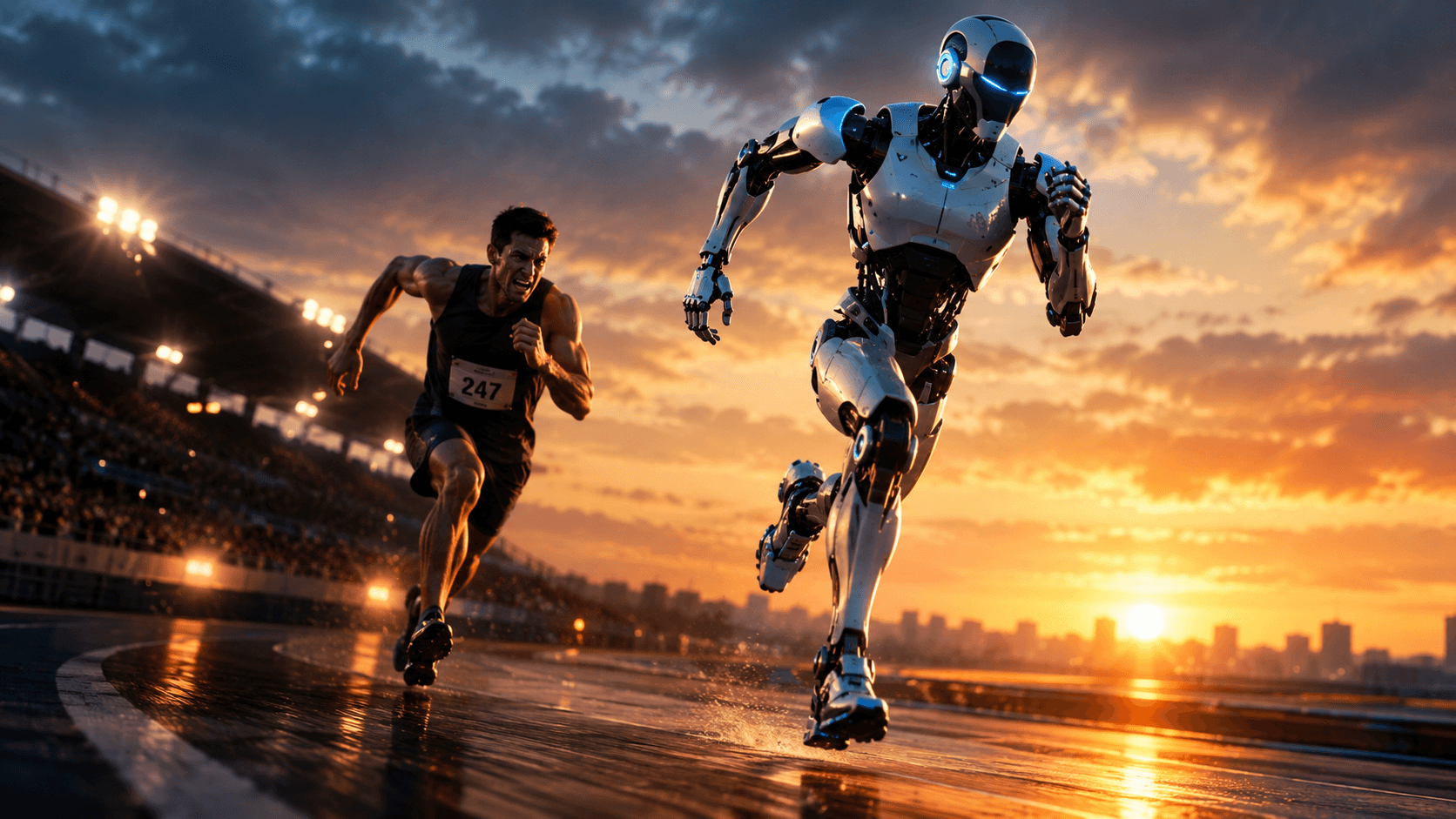
Can artificial intelligence think like humans?
Introduction
You ask a chatbot something and it responds with clarity, good humor and even empathy. It's natural to wonder: can artificial intelligence think like humans?
The short answer is no, at least not in the same way. But the complete answer is much more interesting. In this article, you'll understand how AI works, where it resembles human reasoning, where it's very different and what experts are debating about the future of this technology.
What does "thinking" mean?
Before comparing machines and people, we need to define what thinking is. For humans, thinking involves:
Reasoning: drawing conclusions from information;
Consciousness: perceiving oneself and what one is experiencing;
Emotions: feelings that influence decisions;
Intention: wanting something and acting to achieve it;
Bodily experience: learning through the senses, body and environment.
Current AI can imitate the first item very well. The others are still the subject of much debate, and most scientists agree that machines don't have these capabilities as we do.
How does artificial intelligence really "think"?
Learning from data
Modern AI systems, such as language models (the basis of chatbots), are trained on enormous volumes of text. In this training, they learn patterns: which words, ideas and structures usually appear together.
Prediction, not comprehension like ours
In simplified terms, a language model generates its response by predicting the most likely next piece of text, one chunk at a time. The result may look like reasoning, and in many cases it works as useful reasoning. But the internal process is statistical and mathematical, quite different from the biological processes of the brain.
Neural networks: inspired by the brain, but not the same
The name "neural network" comes from inspiration in neurons. In practice, however, artificial neurons are mathematical functions much simpler than biological ones. The human brain has about 86 billion neurons that work with chemical and electrical signals, reorganize themselves constantly and use very little energy.
Where AI surpasses humans
AI is already superior in several specific tasks:
Speed: analyzes thousands of documents in seconds;
Data memory: works with volumes of information no person could store;
Pattern recognition: detects fraud, identifies signals in medical images and makes predictions;
Strategy games: AI systems have already beaten world champions in chess and Go;
Availability: works 24 hours a day, without fatigue.
Where AI still falls behind the human brain
1. Consciousness and subjective experience
There is no scientific evidence that AI feels anything. It can write "I'm happy," but that doesn't mean there's an internal experience behind the phrase.
2. Common sense and the physical world
A child learns that a glass falls and breaks by playing with it. AI learns mainly from data, without living in the world, and so sometimes makes mistakes in situations any person would find obvious.
3. "Hallucinations"
Language models can invent facts, quotes or references with complete confidence. That's why checking information generated by AI remains essential.
4. Learning from few examples
A human recognizes a new animal after seeing it once or twice. Many AI systems still need many examples to reach the same result.
5. Values, ethics and personal intention
AI has no desires or personal goals. It follows the instructions and limits defined by those who created it and those who use it.
The Turing Test and the Chinese Room argument
Turing Test
In 1950, mathematician Alan Turing proposed a test: if a machine converses in a way that a person cannot distinguish it from a human, it can be considered "intelligent." Today, many chatbots come close to this or even achieve it, which has reignited the debate.
The Chinese Room
In 1980, philosopher John Searle responded with a thought experiment. Imagine a person who doesn't know Chinese, locked in a room, following a manual to respond to messages in Chinese. Those outside think they understand the language, but they're only manipulating symbols. For Searle, machines do something similar: they simulate understanding without actually understanding.
This debate remains open in philosophy and cognitive science.
Comparison table: AI vs. human brain
Characteristic | Artificial intelligence | Human brain |
|---|---|---|
Processing speed | Very high | Moderate |
Consciousness | No evidence | Yes |
Emotions | Only simulated | Real |
Learning | Lots of data | Few examples |
Energy consumption | High (data centers) | About 20 watts |
Creativity | Recombines patterns | Original and intentional |
Common sense | Limited | Broad |
Will AI think like us in the future?
Experts debate so-called Artificial General Intelligence (AGI), a system capable of performing any human intellectual task. Opinions are divided:
Optimists believe AGI could emerge in the coming decades, or even sooner;
Skeptics say the current model, based on data and statistics, isn't enough to achieve truly human thinking;
Safety researchers argue that, whatever the timeline, we need to invest in rules, transparency and ethical alignment.
Most likely in the short term is that AI will function as a tool that amplifies human capacity, not as a substitute for the human mind.
Frequently asked questions (FAQ)
Does artificial intelligence have feelings?
There is no scientific evidence of this. AI can reproduce emotional language, but that doesn't indicate it feels anything.
Can AI be more intelligent than humans?
In specific tasks, yes. In general intelligence, which combines consciousness, common sense and adaptation, not yet.
Why do ChatGPT and other chatbots seem so human?
Because they were trained on enormous amounts of text written by people and learned to reproduce the patterns of our communication.
Can AI replace human thinking?
It can automate tasks, but judgment, ethics, empathy and responsibility remain human roles.
What is AGI?
It's the acronym for Artificial General Intelligence: a hypothetical AI that would have intellectual capacity comparable to humans in any area.
Conclusion
Artificial intelligence doesn't think like humans, but it can simulate parts of human reasoning impressively. It's fast, tireless and excellent with patterns. On the other hand, it has no consciousness, emotions or life experience.
Understanding this difference helps use AI intelligently: as an ally for productivity, study and creativity, always with critical thinking.
Did you enjoy the content? Share it with others who are also curious about technology and leave in the comments: do you think machines will one day think like us?