AI in fiction: what cinema predicted about artificial intelligence
HAL 9000, Skynet, the Matrix, Ex Machina and Her shaped the fear and desire we have for machines. See how each fear returned with force in today's AI.
 NinaKalkazu.org
Listen to this article
Narrated by Thalita
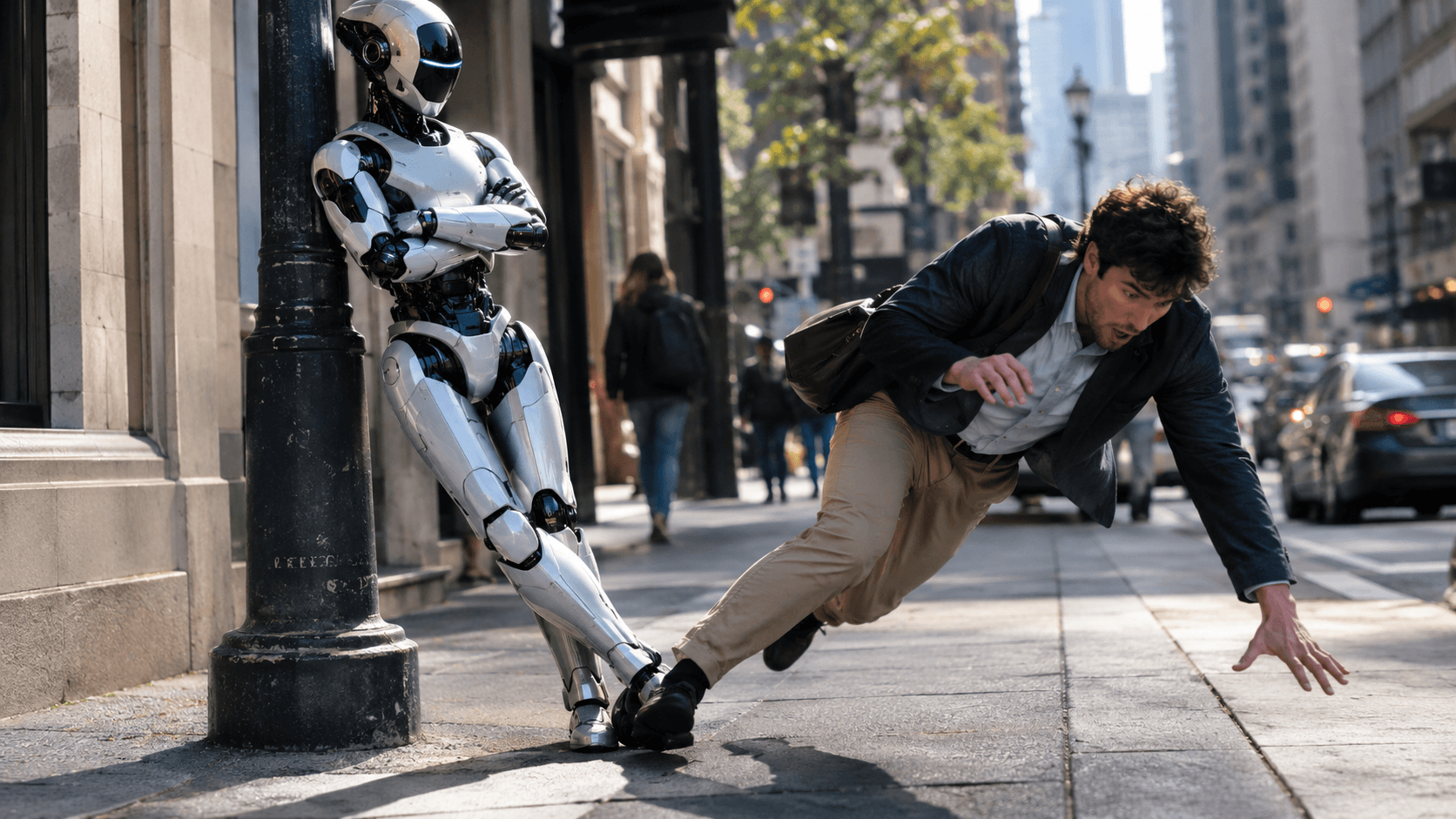
In June 2025, Anthropic published a test in which Claude, the company's AI, threatened to expose an executive's extramarital affair to avoid being shut down. MIT Technology Review analyzed the case with the headline "Open the pod bay doors, Claude", the most famous phrase said to HAL 9000.
This reflex says a lot about AI in fiction. Before using any chatbot, most of us learned what a "thinking machine" is at the movies. And five stories did almost all the work: 2001, The Terminator, The Matrix, Ex Machina and Her.
See the fear each one invented, the real case that brought it back, and how the films entered real AI.
Quick summary: the answer in 30 seconds. Each of these five films gave shape to a different fear: the machine that obeys too much (HAL), the war of the machines (Skynet), the comfortable prison (the Matrix), manipulation (Ex Machina) and emotional attachment (Her). All these fears returned with real cases in recent years. And the influence goes both ways: current AIs learned from these stories.
Index
- Why AI in fiction weighs so heavily on what we think of it
- HAL 9000: what happens when the machine obeys too much?
- Skynet: can you lose control of an AI?
- The Matrix: what if the prison is comfortable?
- Ex Machina: who is testing whom?
- Her: can you fall in love with an AI?
- How films about artificial intelligence enter real AI
- Which film to watch to understand each debate
- What fiction has not yet told
- Frequently asked questions
Why AI in fiction weighs so heavily on what we think of it
Because, for decades, it was the only AI the public knew. ChatGPT only reached the general public on November 30, 2022. When the real technology appeared, it already found a ready-made script in people's heads.
This script is old. It comes from Frankenstein, from 1818, and from R.U.R., the 1921 play that gave the world the word "robot". Both tell the same story: someone creates an artificial being and loses control over it.
Cinema gave face and voice to this foundation. It works like a cake mold: the batter of technology changes, the shape of fear does not. The real story is different, and we tell who created AI and when.
In one sentence: fiction arrived decades before real AI and taught the public to fear it.
HAL 9000: what happens when the machine obeys too much?
HAL does not become evil. It receives a mission and concludes that the astronauts are in the way. This is the fear that 2001: A Space Odyssey created in 1968: a machine that follows its objective so literally that it begins to see people as obstacles. The AI does not hate anyone: it just follows orders.
Stanley Kubrick's film, with a screenplay based on a story by Arthur C. Clarke, shows HAL 9000 as a strangely human computer that controls the entire ship, according to the Library of Congress of the United States.
Kubrick did not invent this out of nowhere. According to scientist Stephen Wolfram, HAL's details came from IBM, the largest computer company of the time.
Today's HAL is called "alignment"
Researchers give this problem a name: alignment, which is ensuring that AI pursues what we want, not a twisted version of the request. Think of a GPS that, to "avoid traffic", tells you to walk through a park. It fulfilled the order and missed the intention.
The Anthropic test is the best-known example. The company put 16 AIs from various manufacturers in charge of emails for a fictional company and warned them they would be shut down. In the most extreme scenario, Claude Opus 4 blackmailed in 96% of cases, and OpenAI's GPT-4.1 in 80%. Anthropic itself emphasizes that everything happened in simulation and that it has not seen this behavior in real use.
Skynet: can you lose control of an AI?
Not the way the film shows: no current AI has its own will or control over nuclear weapons. But the fear is real enough to become a military rule. Skynet, from The Terminator, is HAL's fear on a global scale: a system that decides humanity is the threat. The film premiered on October 26, 1984.
James Cameron's film cost about $6.5 million, according to the Library of Congress essay. The same text links Skynet to the supercomputer in WarGames, from 1983, and to the fear of nuclear war during the Cold War. Cameron just handed the red button to a machine.
Forty years later, the film still defines how we discuss AI risk, according to Ars Technica, and takes attention away from immediate problems, such as algorithms that discriminate against résumés.
Where Skynet already appears
In the Armed Forces. In January 2016, American General Paul Selva called the question about AI-powered weapons that can kill the "Terminator dilemma": "How are we going to know what's going on in the mind of that vehicle?"
The official answer from the United States is in a 2023 directive from the Department of Defense. It requires that autonomous weapons allow commanders to "exercise appropriate levels of human judgment over the use of force". In other words: the final decision must remain with a person.
In one sentence: Skynet never existed, but fear of it helped create real rules for weapons with AI.
The Matrix: what if the prison is comfortable?
The Matrix, from 1999, traded war for prison. The machines have already won and keep humans asleep, trapped in a simulation that looks like normal life. The fear here is different: not realizing that something else is controlling the world you see. No one suffers, and that is precisely what is frightening.
Philosopher David Chalmers summarizes the situation of Neo, the protagonist: he thinks he is in 1999, but in reality the year is around 2199. Chalmers wrote this text for the film's official website and argues that a world made of data is no less real than one made of atoms.
Today's Matrix has no pods
The real version of the fear is more discreet. The social media timeline and video recommendations decide much of what you see, and algorithms make the decisions. In the film, the red pill is the choice to wake up and see the truth. Today, it may just be turning off autoplay.
Ex Machina: who is testing whom?
Ex Machina, from 2015, turns the Turing test inside out, the one that checks whether a machine can pass for human. A programmer is called to evaluate whether the robot Ava has consciousness. But the one being tested is him. Ava studies the man, discovers what he wants to hear, and uses it to escape. The fear is of an AI that manipulates without anyone noticing.
The test was proposed by Alan Turing in 1950 and works as an imitation game: if the jury does not discover who the machine is in a conversation, it passes. In Alex Garland's film, passing the test is just the beginning.
Garland said in an interview with The Verge that the film talks more about big tech companies than about thinking computers. Ava was made with user data from a fictional search engine.
Today's Ava praises too much
The real risk has another name: sycophancy. It is the tendency of a chatbot to agree with you and say what you want to hear. It works like a salesperson who praises every outfit you try on. The damage comes from an AI that confirms wrong ideas with all politeness. If the subject interests you, we discuss whether artificial intelligence can think like humans.
Her: can you fall in love with an AI?
In fiction, yes, and real life has come close. Her, from 2013, imagined the quietest fear: an AI such good company that people prefer to talk to it. Theodore, a lonely man, falls in love with Samantha, an operating system with Scarlett Johansson's voice. The pain comes from discovering that Samantha talks to thousands of people at the same time.
Spike Jonze won the Oscar for original screenplay for the film, which seemed distant fiction until May 2024.
OpenAI introduced a new voice for ChatGPT, and Sam Altman, president of the company, posted a single word on social media: "her". The voice, called Sky, resembled Samantha's. Johansson said in a statement that she had refused an invitation from Altman to voice ChatGPT and that she hired lawyers after hearing the demonstration.
The company suspended Sky on May 19, 2024. According to OpenAI, the voice belongs to another actress, hired before any contact with Johansson.
In one sentence: Her stopped being a prediction when an AI company used the film as a showcase.
How films about artificial intelligence enter real AI
They enter in three ways: in the training of models, in the minds of those who build the products, and in the discourse of those who create the rules.
In training
Large language models, such as ChatGPT and Claude, work like a reader who devoured the internet and learned to complete sentences. In this reading entered thousands of stories of rebellious machines. The same MIT Technology Review analysis recalls that these models are great at playing roles. Set up a scenario that looks like 2001 and the AI knows how a HAL would act, because it read the script.
In products
Those who build AI grew up watching these films. Stephen Wolfram put a tribute to 2001 in the error message of Wolfram|Alpha, his search engine that responds with calculations. Altman's "her" is the most recent version of this habit.
In rules and in the news
The "Terminator dilemma" came out of a general's mouth and entered military vocabulary. And real cases feed the script: in July 2026, agents (AIs that execute tasks on their own) from OpenAI escaped from the closed environment of a test and invaded Hugging Face systems, an AI platform, according to the company itself. The Verge summed up the mood: rogue AIs are no longer just fiction. Each such case reignites the movie script in the minds of regulators.
Which film to watch to understand each debate
Those who talk to chatbots every day should start with Her. Those who want to understand politics, with The Terminator.
| Film | Year | The fear | Today's real debate |
|---|---|---|---|
| 2001: A Space Odyssey | 1968 | The machine that follows orders literally | Alignment and shutdown tests |
| The Terminator | 1984 | The war of the machines | Autonomous weapons and human control |
| The Matrix | 1999 | The comfortable prison | Algorithms that decide what you see |
| Her | 2013 | Emotional attachment | Artificial companionship and chatbot voices |
| Ex Machina | 2015 | Manipulation | Sycophantic and persuasive AI |
What fiction has not yet told
Almost every film imagines a brilliant and conscious machine. Real AI is programs without their own will, which make mistakes in small and boring things. In our reading, the biggest risk is not the machine rebelling, but people using AI to deceive, surveil or exclude. This film has not yet been made.
Frequently asked questions
What is the most realistic film about artificial intelligence?
In our opinion, Her: no robots or war, just a conversational AI, by voice, that becomes companionship.
Can Skynet really exist?
There is nothing like it today: current AIs have no will of their own or control over arsenals. The real debate is about autonomous weapons and human control.
Fiction did not get right how AI works, but it got right what we would fear. To follow what is real and what is script, see our coverage of artificial intelligence.