ChatGPT Ads: Who Pays for Free AI
ChatGPT ads reach images as publishers sue and sign contracts over what AI read. Who pays for free AI in 2026.
 NinaKalkazu.org
Listen to this article
Narrated by Thalita
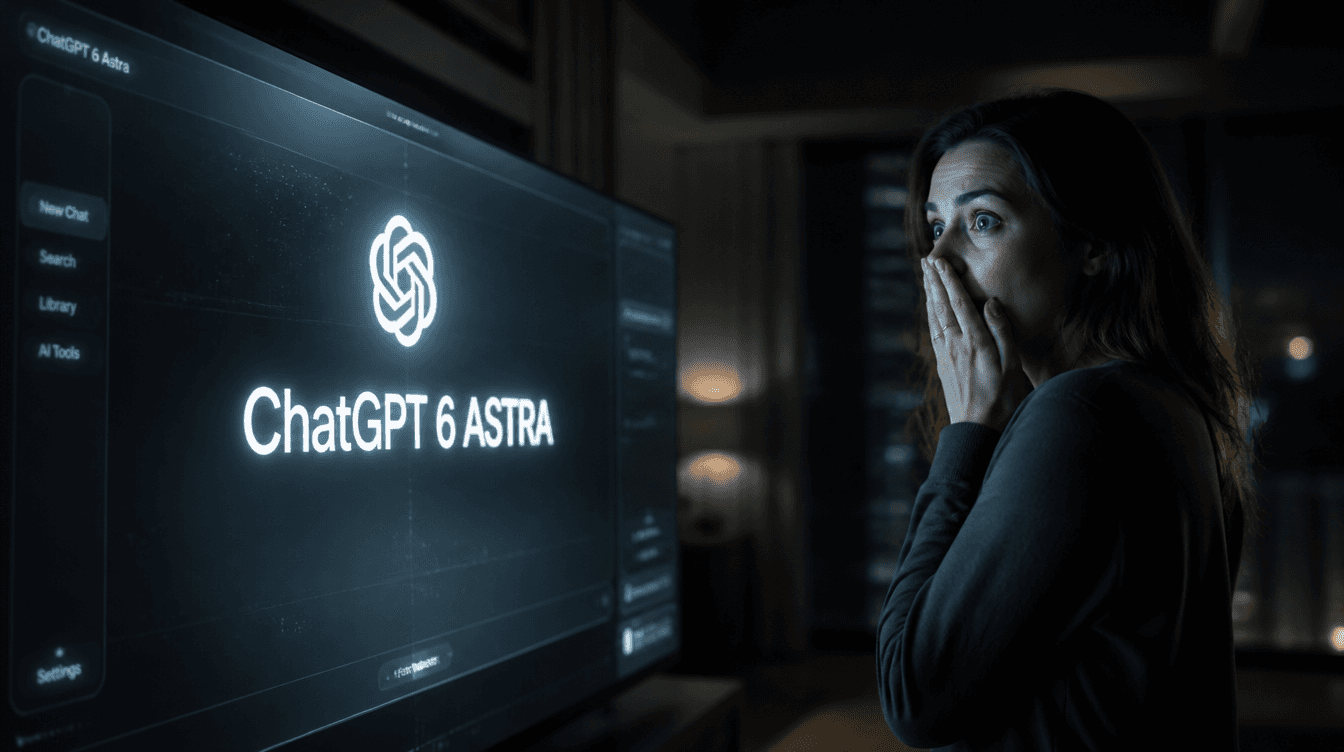
Imagine asking ChatGPT for a living room image to inspire your renovation. The image appears and, next to it, a sponsored space shows a real product. This is the new ad format in ChatGPT that OpenAI introduced on October 5, 2026, with testing scheduled to begin in the United States later this month.
It sounds like small news, but it is one piece of a larger bill. On one side, free AI needs money to run. On the other, newspapers, publishers and writers want payment for what these AIs read to learn.
Advertising, licensing contracts and lawsuits are three ways to split this same bill. This article explains each one, shows where they stand and says what changes for those who use ChatGPT without paying, including in Brazil.
Quick summary: the answer in 30 seconds. Free ChatGPT and Go, the cheapest subscription, show ads; Plus and Pro do not. In Brazil, ads have been running since August 11, 2026. The image format starts only in the United States. OpenAI states that ads do not change the response and that advertisers do not read conversations. Meanwhile, the press charges AI companies through contracts and copyright lawsuits, still without final decisions.
Index
- ChatGPT ads: what they are and when they started
- What changes with the new visual ad?
- Why did free ChatGPT need advertising?
- Do those who wrote what AI read also want payment?
- Where do the copyright lawsuits stand?
- What is fair use, in plain language?
- How to control ads in your account
- What this changes for you
- Frequently asked questions
ChatGPT ads: what they are and when they started
ChatGPT ads are spaces paid for by brands, displayed just below the response, with a sponsored label and separated from the AI text. They appear for adults on the Free and Go plans. Testing began in the United States on February 9, 2026 and reached Brazil on August 11.
Two names appear constantly in this story. The Free plan is ChatGPT at no cost, with no monthly fee. The Go plan is OpenAI's cheapest subscription, one step below Plus. Think of a video platform with a basic plan that costs less because it has commercials: Go follows this logic.
Those who pay more see no advertising. According to OpenAI's help page about ads, the Plus, Pro, Business, Enterprise and Edu plans are excluded (checked on 10/05/2026).
| Plan | Has ads? | Note |
|---|---|---|
| Free | Yes | Can be turned off, with fewer messages per day |
| Go | Yes | Cheapest subscription |
| Plus and Pro | No | More expensive individual subscriptions |
| Business, Enterprise and Edu | No | Company and school plans |
There is an age rule. The company says it does not show ads to accounts identified as belonging to those under 18. Testing applies to logged-in adults.
What changes with the new visual ad?
The ad is no longer just text with a logo and now includes an image. OpenAI will test the format first during image generation, with an initial group of advertisers, in the United States, still in October 2026. The ad is labeled and separated from the image you requested.
Until now, the ad was a discreet block at the end of the response, with the brand name and a link. The new format aims to show the product in use. In the announcement introducing the format, the company talks about images that help people imagine what it would be like to use the product or service in daily life.
Testing applies to those using ChatGPT for free and on the cheap plan, as TechCrunch reported in its coverage of the announcement. OpenAI did not disclose a date to bring the visual format to other countries.
The same announcement brought news for advertisers: more ways to measure whether advertising generated sales, with partner measurement companies. For users, this changes little on screen. For the market, it is a signal that OpenAI wants to compete for the budget that today goes to search engines and social networks.
Where ads do not appear
OpenAI states that ads do not appear in conversations about sensitive or regulated topics, such as health, mental health and politics. Someone asking about a symptom or an election should not see advertising in that conversation.
There is also the central promise, repeated in every announcement: ads do not influence the response. In practice, this means the AI responds first and the sponsored space is chosen afterward, separately. This is a company promise. There is no published independent audit confirming it.
What the advertiser learns
According to OpenAI, advertisers do not have access to your conversations, history, memories or personal data. They receive aggregated numbers, such as how many people saw the ad and how many clicked.
The ad is chosen by conversation topic. If personalization is on, other conversations and ads you have already interacted with also factor in. It is contextual advertising: it works like the newsstand that puts umbrellas up front when it starts to rain. The newsstand owner sees the rain, not your wallet.
In one sentence: the visual ad is a U.S. test, stays outside the image you generated and, by OpenAI's rule, does not appear in conversations about health or politics.
Why did free ChatGPT need advertising?
Because each response costs money and those using the Free plan pay nothing. OpenAI says keeping the Free and Go plans fast requires continuous infrastructure investment and that ads help cover this expense. The alternative would be to limit free use more or charge everyone.
A traditional search engine returns a list of links, which is cheap. An AI writes new text for each question, and to do this it uses expensive chips inside data centers (warehouses full of computers running all day). We already explained this cost in the article about the energy bill of AI data centers, and the same pressure appears in the guide about free Google AI.
The expansion was rapid, as shown by the timeline assembled from company announcements:
| Date | What happened |
|---|---|
| February 9, 2026 | Testing begins in the United States, on Free and Go plans |
| August 11, 2026 | Ads reach Brazil, United Kingdom, Mexico, Japan and South Korea |
| August 18, 2026 | Expansion to 31 European markets |
| August 31, 2026 | OpenAI reports $1 billion in annualized ad revenue |
| October 5, 2026 | Visual format announced, testing in the United States |
The August number deserves context. Annualized revenue is a projection: it takes the most recent revenue pace and multiplies it for twelve months. OpenAI said, in the report it published about ads, that it reached this pace in less than 200 days. It is like earning $1,000 in a week and saying you earn $52,000 a year: it shows the pace, not the money already received.
Do those who wrote what AI read also want payment?
Yes. A text AI learns by reading billions of pages, and many of them were written by journalists and authors who live on subscriptions and advertising. When AI responds directly, the reader does not visit the original site. That is why the press charges, through contracts or in court.
Two uses must be separated. Training is the phase when the model reads a mountain of texts to learn language patterns, like a student who reads a lot before writing. Grounding is when the AI searches for today's news to respond and shows the source, like someone consulting today's newspaper before giving an opinion.
The difference matters because contracts treat the two differently. Authorizing an AI to cite your story with a link is one thing. Authorizing it to learn from your entire archive is another.
Licensing contracts
Licensing is renting the right to use. OpenAI closed deals with media groups, including a multi-year contract with News Corp, owner of the Wall Street Journal, plus partnerships with the Financial Times, Axel Springer, Le Monde and the Washington Post. The News Corp announcement does not disclose amounts.
Microsoft took another path and created a kind of marketplace. In the Publisher Content Marketplace, introduced in February 2026, the publisher defines its terms and AI companies pay for the content they use. Microsoft makes clear the system covers grounding and display, not training.
Initial participants include the Associated Press, Condé Nast, Hearst and Vox Media. These are large companies, with lawyers and negotiating power. The small blog and the mid-sized city newspaper are left out of this table.
Cloudflare's toll
For those without contracts, the solution came from a company that sits between the site and the visitor. Cloudflare, which protects and accelerates a large slice of the world's websites, began blocking AI bots by default on pages with ads.
A crawler is the program that visits pages automatically to copy content. The search engine's does this to put the site in the results list and send visitors. The AI's copies to train a model or to supply an agent, which is the AI that browses and performs tasks on its own.
According to Cloudflare's announcement of July 1, 2026, the rule has applied since September 15 for new sites and free plan customers. On pages with advertising, the search bot enters. Training and agent bots stay out. The site owner can change the setting.
The company also launched Pay Per Use, where the publisher receives payment when content is actually used in a response. According to Cloudflare, more than half of web page accesses now come from bots and agents, not people.
In one sentence: those with big names sign contracts, and those without now rely on automatic blocking and a usage toll.
Contracts and tolls solve the future. The past, what was already read without authorization, is in the courts.
Where do the copyright lawsuits stand?
No higher court has decided the question. The New York Times lawsuit against OpenAI and Microsoft is at the stage where both sides are asking the judge for a decision without a jury. The Anthropic case ended in a $1.5 billion settlement. The U.S. government entered the field in favor of OpenAI.
| Case | Where | Status as of 10/05/2026 |
|---|---|---|
| New York Times and other newspapers v. OpenAI and Microsoft | Federal court in New York | Summary judgment motions filed in September |
| Authors v. Anthropic | Federal court in California | $1.5 billion settlement approved July 20 |
| U.S. government brief | In the New York case | Filed September 1, in favor of training |
New York Times v. OpenAI and Microsoft
The lawsuit was filed in 2023 and now brings together several outlets in the same case, under Judge Sidney Stein. On September 17, 2026, the 92-page petition from the newspapers became public, with fewer sections under seal. It requests summary judgment, which is the judge's decision without taking the case to a jury.
The document cites internal messages from the defendants themselves. A Microsoft director of applied science, Brent Hecht, described the text collection as possibly "the largest theft of labor in human history." The head of ChatGPT, Nick Turley, wrote that the products are "largely substitutive" and that outlets face an "existential threat."
There are numbers too. The petition states that one training dataset contained copies of at least 160,903 works from the newspapers. And that Microsoft recorded an 83% to 93% drop in click-through rates to Times and Daily News sites when the response came from Copilot, Microsoft's AI, instead of Bing's regular search.
This is the accuser's side, and a petition chooses excerpts that favor it. In the defense filed the same day, OpenAI says its models were not made to repeat texts. Its expert found 24 literal copies in 20 million conversations analyzed, a rate of 0.00012%.
The dispute, then, is not about whether AI read the newspapers. That is admitted. It is about whether the reading is permitted by law and whether the harm is the kind the law punishes. TechCrunch summarized the documents and reported that both companies did not respond to requests for comment.
Anthropic's $1.5 billion settlement
Anthropic, owner of Claude, was sued by writers and reached a settlement. The order approving the settlement, signed by Judge Araceli Martínez-Olguín on July 20, 2026, speaks of about $3,000 per work, for a list of 482,460 books.
The amount per work is four times the $750 minimum that U.S. law provides for infringement. The order calls the case the largest class action copyright settlement in history. The official settlement website anticipates first payments by November 15, 2026.
The detail that changes the reading: the settlement money is not punishment for training. In 2025, Judge William Alsup, who handled the case before the current judge, considered training a "spectacularly" transformative use, meaning it creates something new instead of copying. The problem was the origin of the copies, downloaded from pirate libraries.
The settlement covers only this past and requires the company to destroy the files.
Being a settlement, it does not bind other judges to decide the same way. And it deliberately leaves out any complaint about what the AI writes. We already covered the company's finances in the article about what Anthropic's prospectus reveals.
The U.S. government enters on OpenAI's side
On September 1, 2026, the Department of Justice delivered to the New York judge a 20-page brief. The government is not a party in the case. It used an instrument that allows it to offer an opinion when it believes the country's interest is at stake.
The argument mixes law and geopolitics. The text says the United States has a strong interest in a competitive AI industry and that it would be "legally incorrect" to impose a general rule making training illegal without a license. It cites national security and the dispute with foreign adversaries.
The brief makes a caveat that few noticed. It separates training from output: if AI reconstructs and distributes a protected work, that use may not be transformative. In other words, even the government admits that copying in the output is another conversation.
What is fair use, in plain language?
Fair use is the U.S. rule that allows using a portion of protected work without asking permission, as long as the use is reasonable. It is not a closed list: the judge weighs four factors case by case. That is why AI still has no definitive answer.
An everyday example. Quoting two paragraphs from a book in a review is fair use: you created something new, used little and did not take sales from the author. Photocopying the entire book and selling it at the college entrance is not, because the copy substitutes for the original.
| Factor | Question the judge asks | What AI companies say | What the press says |
|---|---|---|---|
| Purpose | Does the use create something new? | The model learns patterns, does not store texts | The response substitutes for the news |
| Nature of work | Is it creative or factual? | News is fact, and fact has no owner | Reporting is authorial work |
| Amount | How much was copied? | Copying everything is necessary to learn | They copied the entire archive |
| Market effect | Does it take money from the author? | There is no harm the law recognizes | Clicks plummeted |
The first and fourth factors decide almost everything. If the judge sees AI as a new tool, training tends to pass. If they see a competitor that delivers the news without sending the reader to the newspaper, the result changes.
In Brazil the logic is different. Brazil's Copyright Law, the LGPD, does not have fair use: article 46 brings a list of situations where use is free, such as quotation with source indication. AI training does not appear on this list, and the law is from 1998.
In one sentence: in the United States, training AI with protected text depends on a judge finding the use reasonable, and in Anthropic's case the judge accepted training and rejected the pirate copy.
How to control ads in your account
You do not need to accept the default setting. OpenAI offers four controls, described on the help page (checked on 10/05/2026). The menu appears as Settings > Ad Controls.
- See why the ad appeared. Each ad has an option that explains the reason for display. You can also dismiss the ad and send feedback.
- Turn off personalization. Ads continue, but now use only the current conversation topic. Other conversations and ad history stop counting.
- Delete data used for ads. Cleanup can be done at any time, in the same menu.
- Trade ads for a lower limit. On the Free plan, there is an ad-free option, with fewer messages per day and fewer features.
The fourth option is the most revealing: those who want no ads and no monthly fee pay with fewer messages per day. It is the bill from the beginning of this article, this time written in the menu itself.
What this changes for you
For those who only use ChatGPT, the change is small and already in effect in Brazil: labeled ads on the free plan and Go. For content producers, the change is larger, because for the first time there are tools to block or charge AI bots.
The three fronts of this article fit in a single table. In all, the question is the same: who pays for the response you receive for free?
| Front | Who pays | Who receives | Known size |
|---|---|---|---|
| Advertising | The advertising brand | OpenAI | $1 billion per year pace |
| Licensing | The AI company | The outlet with contract | Amounts not disclosed in announcements |
| Lawsuit | The AI company, if it loses or settles | Authors and outlets | $1.5 billion in Anthropic's case |
The comparison shows the size of the dispute. A single settlement with writers cost more than an entire year of ads at the pace reported in August. The ad you see on screen is the small part of the bill.
What about Brazil?
Ads have been running here since August 11, 2026, on Free and Go plans. The image format does not yet have a date for the country. Controls are in the same menu, and Brazil's copyright law, from 1998, does not address AI training. None of the cited lawsuits are proceeding in Brazil.
| If you are | What changes | What to do |
|---|---|---|
| Free plan user | See ads below responses | Adjust personalization in ad controls |
| Go subscriber | Also see ads, even while paying | Compare Go and Plus pricing on the plans page |
| Plus or Pro subscriber | Nothing | No action |
| Website or blog owner | AI bots can be blocked or charged | Check AI options in your provider's panel |
| Journalist or author | The value of your archive is in dispute | Follow the decision in the New York Times case |
An opinion, with justification. For those who use ChatGPT occasionally, the ad is an acceptable price, as long as the rule of not touching the response holds. The real risk is not in the banner. It is in the day when response and sponsorship stop being separated, and only outside auditing can tell.
It is also worth following the regulatory side. We explained in the article about the FTC investigation of OpenAI and Anthropic how the U.S. consumer protection agency began looking at these companies. Other sector topics are on our artificial intelligence page.
Frequently asked questions
Does paid ChatGPT have ads?
It depends on the plan. Go, which is the cheapest subscription, has ads. Plus, Pro, Business, Enterprise and Edu do not, according to OpenAI's help page (checked on 10/05/2026).
Do ads change ChatGPT's response?
OpenAI states they do not. According to the company, ads appear labeled as sponsored and visually separated from the AI text. This is a statement from the company itself, without independent verification published so far.
Are there ads on free ChatGPT in Brazil?
Yes. Brazil entered the list on August 11, 2026, along with the United Kingdom, Mexico, Japan and South Korea. The visual format, linked to image generation, begins testing only in the United States.
Can AI train with copyright-protected text?
In the United States, the question remains open. In Anthropic's case, a judge considered training a transformative use and condemned the pirate origin of the copies. The New York Times lawsuit against OpenAI does not yet have a decision on this point.
What is content licensing for AI?
It is a contract in which an outlet authorizes an AI company to use its texts, in exchange for payment. It can cover only citation with link in responses, only training, or both. Each contract defines the scope.
Who wins the New York Times lawsuit against OpenAI?
Nobody knows. Both sides requested summary judgment in September 2026 and the U.S. government opined in favor of OpenAI. Whatever the judge's decision, the losing side can appeal.
Free AI was never free: someone always paid, with investment, with data or with the work of those who wrote what it read. In 2026, the bill became visible, in the ad next to the image and in the New York petitions. If you use the Free plan, the next step takes two minutes: open ad controls and choose what you accept.